Ghormeh sabzi: the Persian herb stew, explained
The dark green stew most Iranians mean when they say home: slow-fried herbs, lamb, kidney beans and dried lime over saffron rice.
In this article
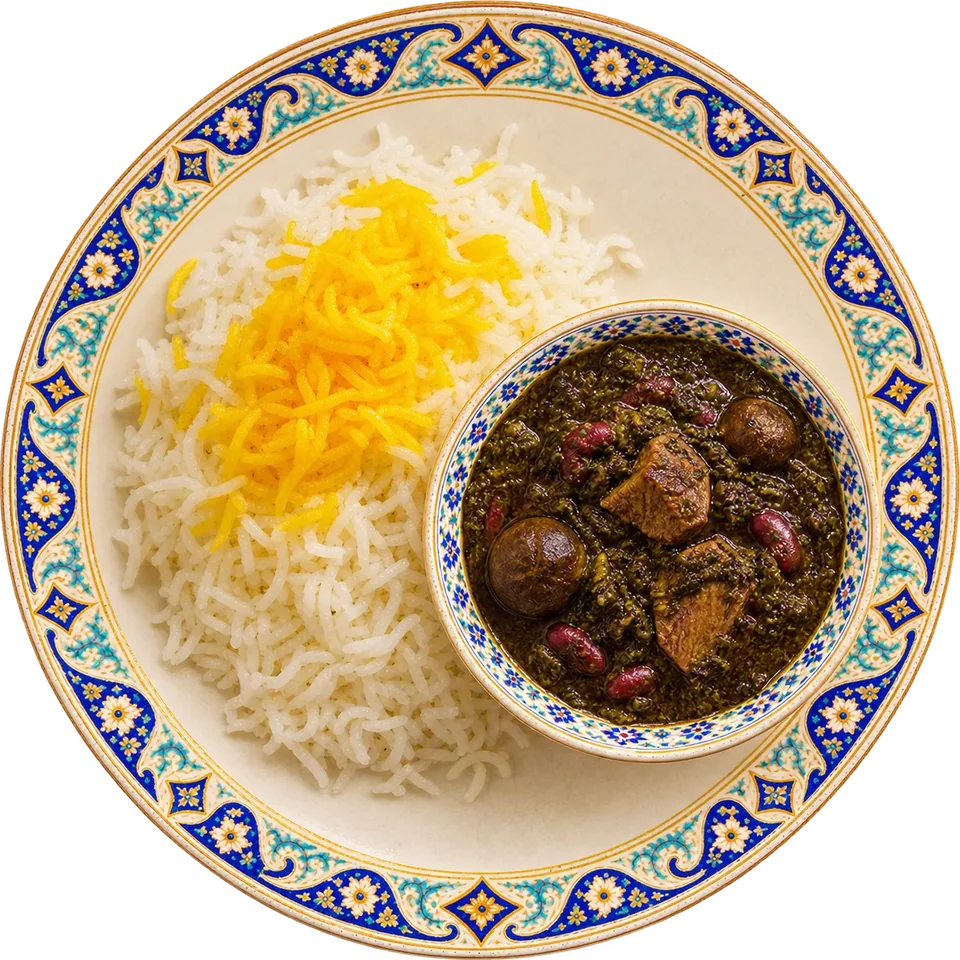
Ghormeh sabzi is a Persian stew of slow-fried herbs, tender meat, kidney beans and whole dried limes, served over saffron rice. It is dark green, sour and fragrant, and it is not spicy. Ask an Iranian which dish tastes most like home and the answer, more often than not, is this one; the smell of it frying fills a whole stairwell.
Ghormeh sabzi at a glance
- What it is: a slow-cooked Persian herb stew
- Main ingredients: parsley, coriander, leek or chives, fenugreek, lamb or beef, kidney beans, dried limes
- Taste: sour, herby and savoury, not hot
- Served with: steamed saffron rice, often with a crisp tahdig
- Cooking time: three to four hours, most of it unattended
- Also spelled: ghorme sabzi, qormeh sabzi (Persian: قورمهسبزی)
What is in ghormeh sabzi?
The name roughly means "braised herbs", and the herbs are the dish. A good pot uses a large bunch each of parsley and coriander, a leek or a handful of chives, and a smaller amount of fenugreek leaves. Fenugreek is the herb that makes ghormeh sabzi taste like itself: slightly bitter, almost like maple, and strong enough that too much of it takes over.
The rest of the pot is simple. Lamb shoulder or beef in large pieces, red kidney beans, turmeric, onion, and whole dried limes. The limes are the second signature. They are small, hard and brown, and once pierced and simmered they give the stew a sour, almost smoky depth that fresh lemon juice cannot copy.
Why are the herbs fried until they are almost black?
This is the step that separates a good ghormeh sabzi from a green soup. The chopped herbs are fried slowly in oil for a long time, stirring often, until they lose their bright colour and turn very dark green. The water cooks off, the flavour concentrates, and the herbs become something closer to a paste than a salad.
Rush it and the stew tastes grassy. Burn it and it tastes bitter. Most Iranian families have an opinion on exactly how dark is right, and most of those opinions come from a mother or grandmother.
How is it cooked?
- Brown the onion and meat with turmeric.
- Add water and let the meat simmer gently.
- Fry the chopped herbs slowly, separately, until deep green.
- Add the herbs, soaked kidney beans and pierced dried limes to the meat.
- Simmer on a low heat for three to four hours, until the oil rises to the top and the meat falls apart.
The rising oil is the sign every Persian cook looks for. It means the stew has cooked long enough for the herbs and meat to come together.
What does it taste like, if you have never tried it?
Think of a slow-braised stew with the depth of a long-cooked ragù, but sour instead of sweet, and herby instead of tomato-led. The dried lime gives a citrus note that grows the longer you eat. The beans make it filling. With saffron rice it is a complete lunch that keeps you going through an afternoon of meetings.
Why ghormeh sabzi is a good lunchbox dish
Stews like this one are built to be eaten the next day. A night in the fridge lets the herbs, the lime and the meat settle into each other, and the stew reheats evenly without drying out. It also freezes well, so a portion meant for Friday can wait in the freezer.
Where to find ghormeh sabzi in Stockholm
You can cook it at home: Iranian grocers around Stockholm sell dried limes, fenugreek and sometimes ready-chopped frozen herb mixes. It is a long cook, though, and the frying alone takes the better part of an hour. Persian restaurants in Stockholm serve it too.
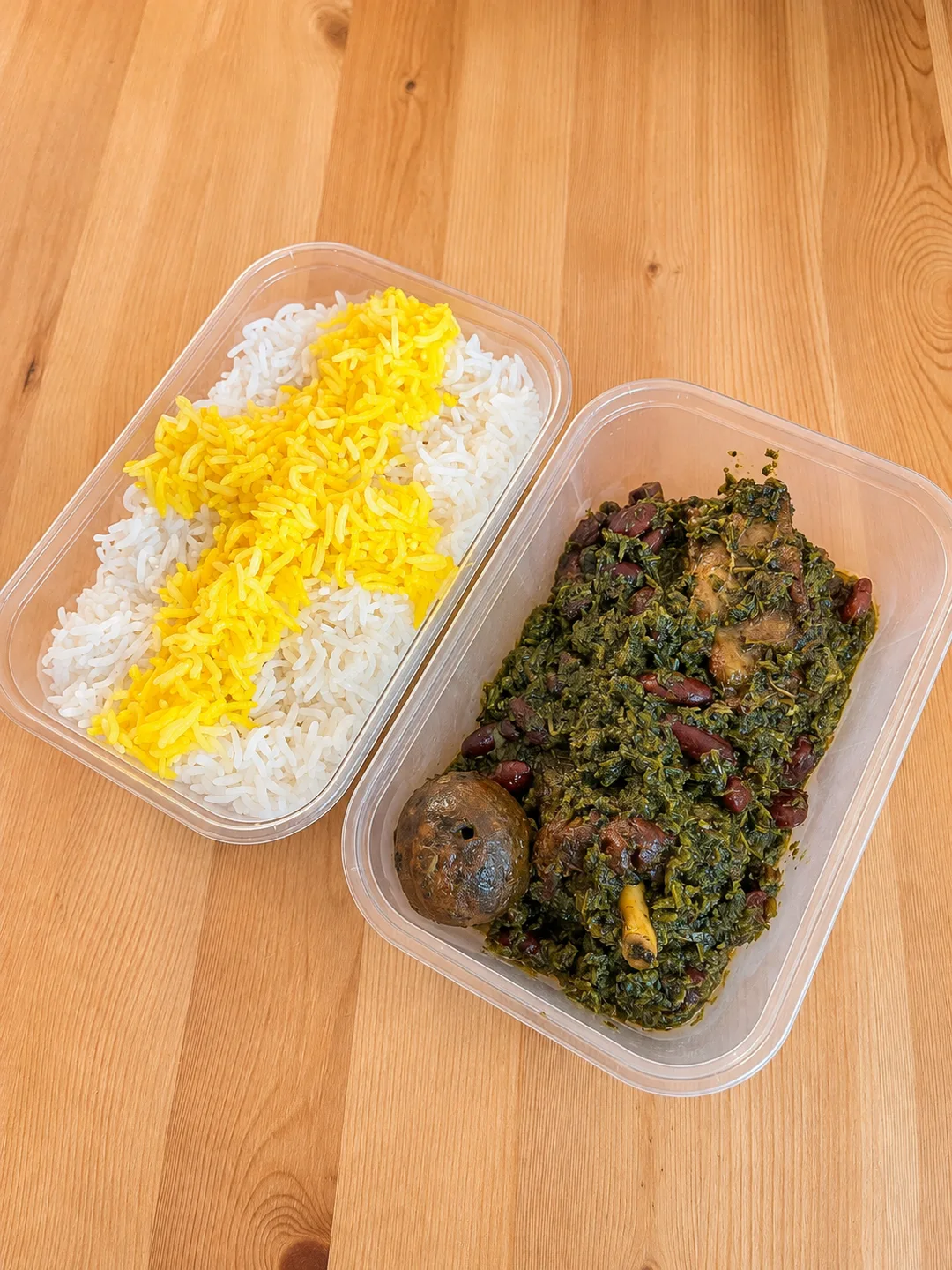
Or you can let Douri cook it. Ghormeh sabzi is one of the dishes in the rotation for our Sunday lunchbox: halal lamb shoulder simmered for four hours in hand-chopped herbs, with saffron rice, tahdig, Shirazi salad and torshi. Order by Saturday 12:00 and it arrives at your door in Stockholm on Sunday between 14:00 and 20:00, ready for the working week. How it works.
Read next: what tahdig is, the crisp rice that comes with it, and fesenjan, the walnut stew.
Frequently asked questions
What is ghormeh sabzi?
Ghormeh sabzi is a Persian stew of slow-fried herbs, lamb or beef, kidney beans and dried limes, served over saffron rice. Many Iranians call it the national dish.
What does ghormeh sabzi mean?
Ghormeh means braised or fried, sabzi means herbs: braised herbs. It is also spelled ghorme sabzi and qormeh sabzi.
What does ghormeh sabzi taste like?
Sour, herby and savoury. The sourness comes from dried limes and the depth from herbs fried until dark. It is not spicy.
Is ghormeh sabzi spicy?
No. It has no chilli; its character comes from sourness and herbs.
Can ghormeh sabzi be made vegetarian?
Yes. Many families use extra beans or mushrooms instead of meat. Douri cooks it with lamb.
Does ghormeh sabzi taste better the next day?
Most Iranians would say yes. A night in the fridge lets the flavours settle, which is why it suits a lunchbox.
Where can I get ghormeh sabzi in Stockholm?
Persian restaurants in Stockholm serve it, and Douri delivers it home-cooked in its Sunday lunch box when it is on the week's menu. All meat at Douri is halal.