Fesenjan: the walnut and pomegranate stew, explained
Ground walnuts and pomegranate molasses, cooked for hours until dark and glossy. Sweet and sour at once, and unlike anything else on the table.
In this article
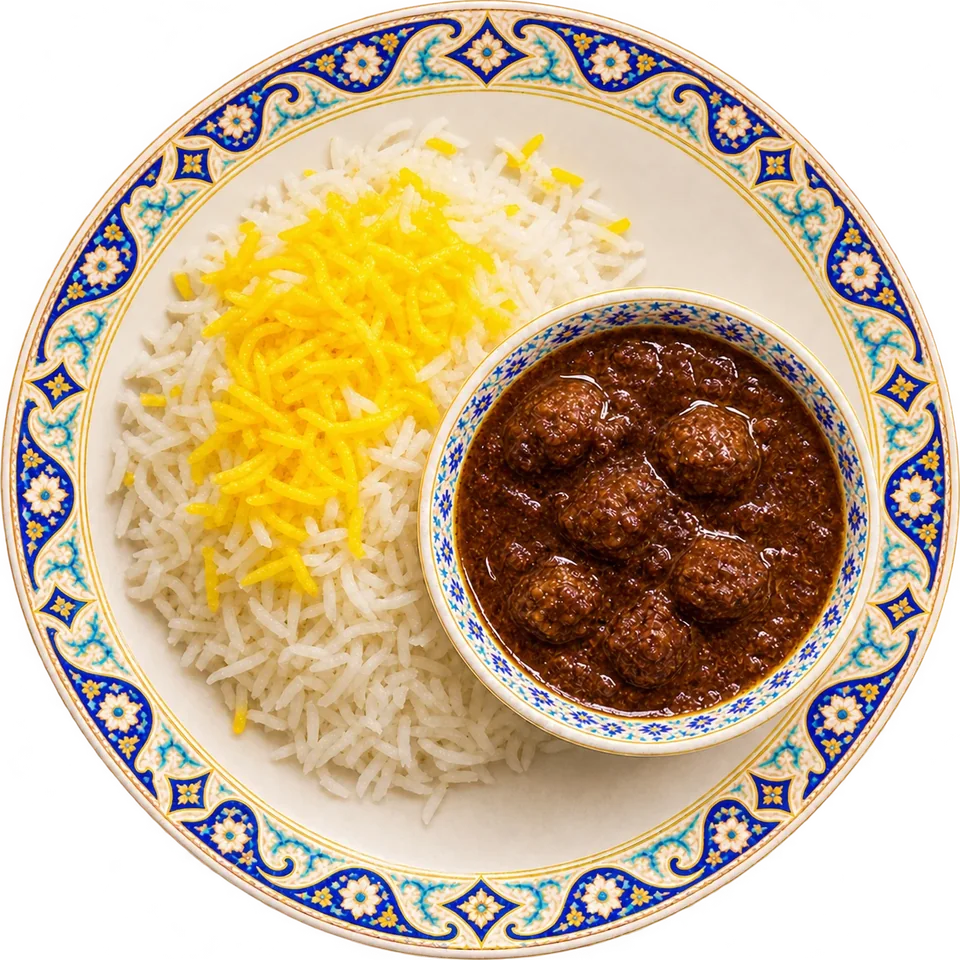
Fesenjan is a Persian stew of ground walnuts and pomegranate molasses, cooked for hours until it turns thick, glossy and the colour of dark wood. It is sweet and sour at the same time, rich without being heavy, and it is the Persian dish that surprises people the most: nothing else on the table tastes like it.
Fesenjan at a glance
- What it is: a walnut and pomegranate stew
- Usually made with: chicken, duck or small meatballs
- Taste: nutty, sweet and sour, never spicy
- Served with: saffron rice
- Allergens: tree nuts (walnuts)
- Also called: fesenjoon, khoresh fesenjan (Persian: فسنجان)
What is fesenjan made of?
Two ingredients carry the whole dish. The first is walnuts, toasted and ground fine. The second is pomegranate molasses: pomegranate juice boiled down until it is thick, dark and sharply sour. Together with onion, a little water and patience, they become the sauce.
The meat varies by family and by region. Chicken is the most common today. Duck is the old-fashioned choice. In the north of Iran, small meatballs are popular, and that is how Douri makes it: lamb and onion rolled by hand and simmered in the sauce until they take on its colour.
Why does fesenjan take so long to cook?
The walnuts need time. As the sauce cooks slowly over a low heat, the nuts release their oil, the sauce darkens, and the raw nutty taste turns deep and round. Cooks watch for the moment when a thin layer of walnut oil appears on the surface. That oil is not a mistake; it means the stew is done.
A fesenjan cooked for forty minutes and one cooked for three hours look similar in a photograph. They do not taste similar.
Sweet or sour? The family argument
Every household balances fesenjan differently. Some add a spoon of sugar to soften the pomegranate; others want it sharp enough to make you blink. The north of Iran tends to like it sourer, other regions sweeter. There is no right answer, only the version you grew up with.
What to eat with fesenjan
Plain saffron rice is the classic partner, because the stew is rich and needs something neutral beside it. Fresh herbs and radishes on the side cut through the walnut. A scatter of fresh pomegranate seeds on top adds a bright, juicy contrast.
A Persian stew with walnuts: what to expect the first time
If you have never eaten a stew made of nuts, the first spoon is a surprise. The sauce is as thick as a mole and as dark as chocolate, but the taste is neither: it starts nutty, turns sour from the pomegranate, and ends slightly sweet. People who like sweet-and-sour food, tamarind or a good balsamic usually take to it at once.
Fesenjan in a Stockholm lunchbox
Fesenjan is one of the dishes in the rotation for Douri's Sunday box: halal lamb meatballs in walnut and pomegranate sauce, saffron rice with tahdig, fresh herbs and radish, and pomegranate seeds. Because it contains walnuts, it is always marked with that allergen. Like most slow stews it reheats well, which makes it a good lunch at work. Order by Saturday 12:00 for delivery in Stockholm on Sunday, 14:00 to 20:00. How it works.
Read next: ghormeh sabzi, the herb stew that is its opposite in almost every way.
Frequently asked questions
What is fesenjan?
Fesenjan is a Persian stew of ground walnuts and pomegranate molasses, cooked for hours with chicken, duck or small meatballs and served with saffron rice. It is also called fesenjoon or khoresh fesenjan.
What does fesenjan taste like?
Nutty, sweet and sour at once, with a dark, glossy sauce. It is rich but not spicy.
Is fesenjan sweet?
It is both sweet and sour; the balance depends on the cook. The north of Iran tends to like it sourer.
Is fesenjan safe for people with nut allergies?
No. Walnuts are the base of the sauce and cannot be left out.
Is fesenjan high in calories?
It is a rich dish: the sauce is mostly walnuts, which are high in fat. A normal portion with rice is a full, filling lunch.
Why is my fesenjan not dark?
Usually it has not cooked long enough. The colour deepens as the walnuts release their oil over a low heat.
Where can I get fesenjan in Stockholm?
Persian restaurants in Stockholm serve it, and Douri delivers it home-cooked, with halal lamb meatballs, in its Sunday lunch box when it is on the week's menu.